
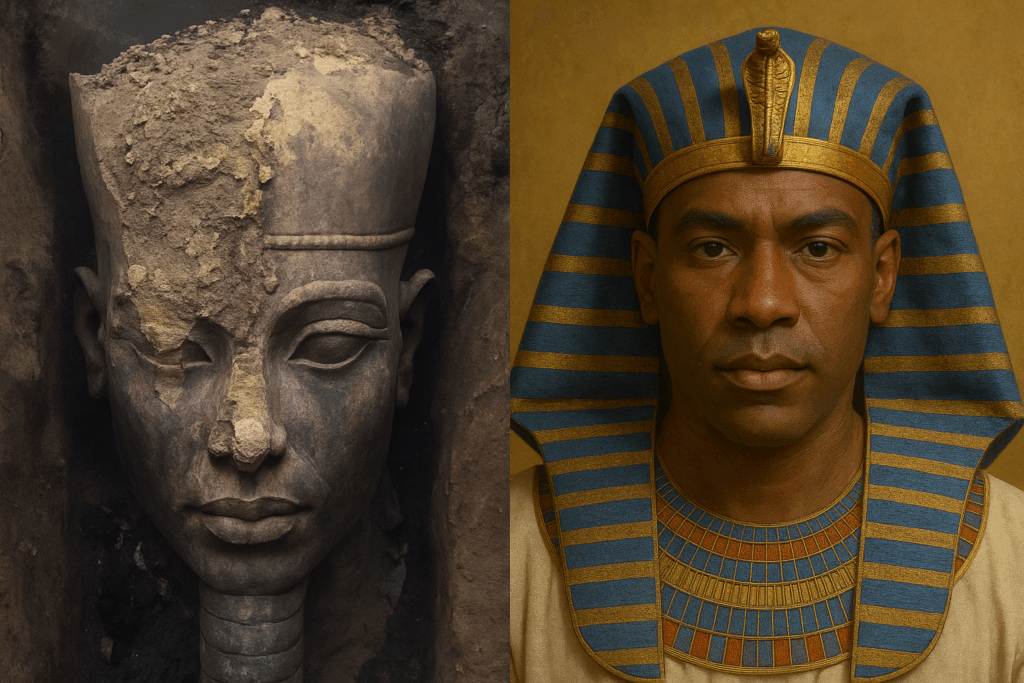
Cairo, Egypt — Archaeologists discover have uncovered a monumental quartzite head of Pharaoh Psamtik I, a 7th-century BCE ruler who founded Egypt’s 26th Dynasty, during excavations in the ancient city of Heliopolis. The discovery, hailed as one of the most significant finds in recent years, offers a rare glimpse into a period of political revival and cultural renaissance.
The colossal head, carved from durable quartzite stone, once belonged to a towering statue believed to have stood more than 30 feet tall. Though heavily weathered, the artifact retains strikingly regal features — almond-shaped eyes, full lips, and the remnants of a royal headdress. Despite centuries of burial and erosion, the sculpture’s sheer presence testifies to the enduring power and authority of ancient Egyptian kingship.
“This is not just a fragment of stone,” said Dr. Khaled el-Anany, former Minister of Antiquities. “It is a voice from history, reminding us of Egypt’s resilience and grandeur under Psamtik I, a ruler who restored unity and independence after years of foreign domination.”
Psamtik I, who reigned from 664 to 610 BCE, emerged as a pivotal figure during a turbulent era. Following Assyrian incursions into the Nile Valley, he reasserted Egypt’s sovereignty and ushered in the Saite Period, marked by stability, prosperity, and a deliberate revival of Old Kingdom traditions in art, culture, and governance.
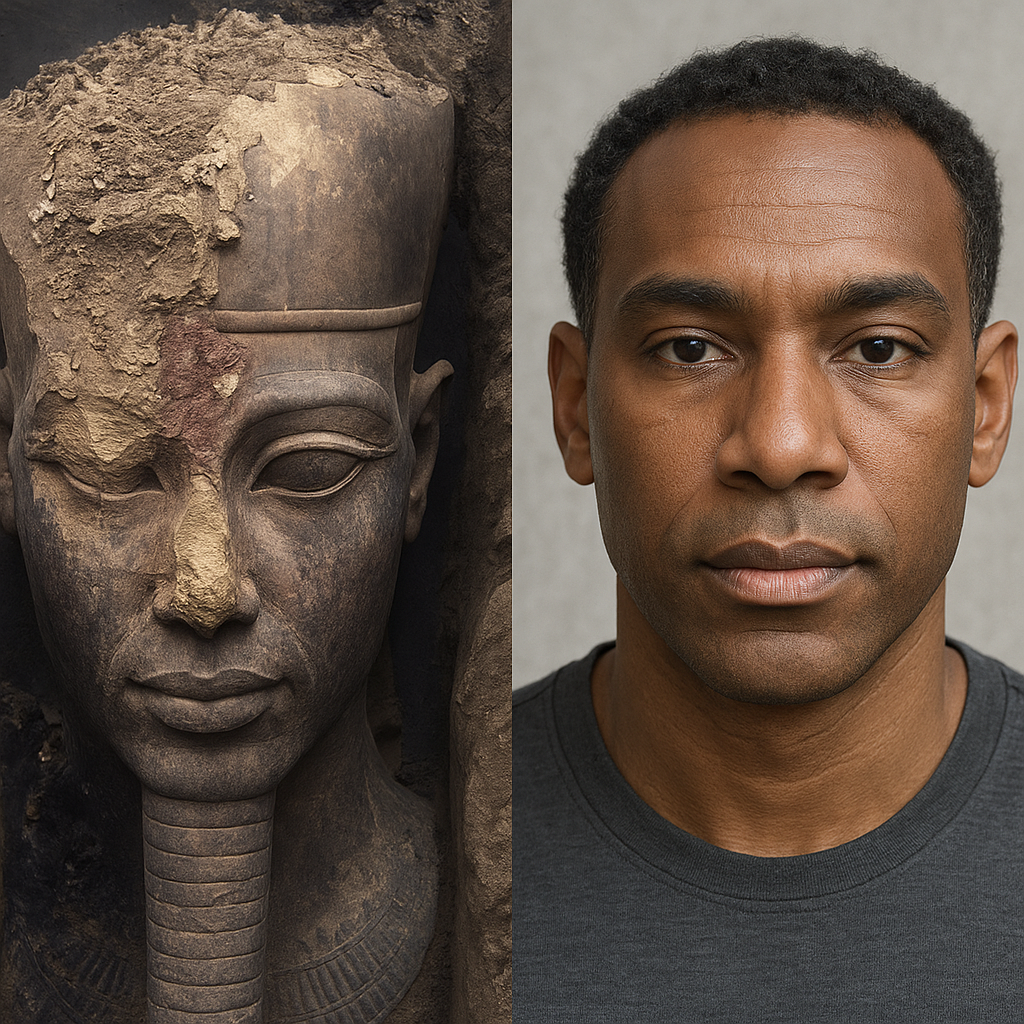
The statue fragment was found in Heliopolis, a sacred city dedicated to the sun god Ra. Once a bustling center of worship and royal patronage, most of Heliopolis now lies beneath Cairo’s modern sprawl. Excavations in the area have yielded several monumental artifacts in recent decades, but the Psamtik head is among the most impressive to date.
Archaeologists believe the statue may have originally stood at a grand temple entrance, projecting Psamtik’s authority to subjects and gods alike. The decision to carve the likeness from quartzite — a stone prized for both beauty and durability — further underscores the pharaoh’s intention to immortalize his reign.
For now, the colossal head has been transported to the Egyptian Museum in Cairo, where conservators will stabilize and restore the fragment before putting it on public display. Scholars say the find not only enriches our understanding of Psamtik I’s reign but also deepens appreciation for Egypt’s enduring artistic legacy.
“Even as a broken fragment,” remarked Dr. Salima Ikram, a leading Egyptologist, “this head radiates majesty. Psamtik I’s presence survives, reminding us that time may erode stone, but not memory.”